- Worldwide Delivery
- Quality Guaranteed
- Bonus pills
- 24/7 Support
Flibanserin acts on brain neurotransmitters involved in sexual desire rather than increasing genital blood flow. It is intended for premenopausal women with acquired, generalized hypoactive sexual desire disorder (HSDD) that causes personal distress. Daily bedtime treatment may gradually improve desire and reduce distress linked to low sexual interest.
Overview
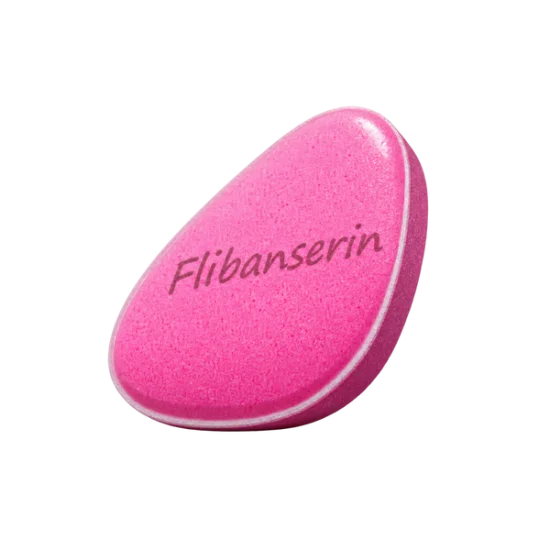
Flibanserin is the active pharmaceutical ingredient in the product marketed in the United States as Addyi. It belongs to a class of centrally acting medicines that changes signaling between several neurotransmitter systems in the brain.
Dosage and administration
Flibanserin is taken orally on a regular schedule. It is not a treatment for erectile dysfunction, vaginal dryness, or pain during intercourse.
Flibanserin is taken as an oral tablet once daily at bedtime. The prescribed amount and duration are determined by the treating clinician. Treatment is intended for regular use, not for occasional dosing before sexual activity.
Practical administration points include:
- Take the prescribed dose at bedtime.
- Do not take an extra tablet to compensate for a missed dose.
- Do not take it during the day unless a prescriber has specifically changed the schedule.
- Avoid driving, cycling in traffic, or operating machinery after a dose if dizziness or sleepiness occurs.
- Do not stop other medicines that affect liver enzymes without medical direction.
- Treatment is generally reassessed if there is no meaningful improvement after an adequate trial.
A missed dose should be skipped. The next scheduled dose is taken at bedtime. Doubling the next dose can increase central nervous system depression, dizziness, and fainting risk.
Formulation
Flibanserin is the active pharmaceutical ingredient in the product marketed in the United States as Addyi.
How it affects the body
Flibanserin changes signaling between several neurotransmitter systems in the brain. It acts as an agonist at serotonin 5-HT1A receptors and an antagonist at 5-HT2A receptors. These actions can reduce inhibitory serotonin signaling while increasing dopamine and norepinephrine activity in selected brain regions involved in sexual motivation [2].
This mechanism differs from medicines that improve blood flow. Flibanserin does not create an erection, increase genital blood flow, or produce an immediate response after sexual stimulation.
Dopamine and norepinephrine are associated with motivation, attention, reward, and interest. Serotonin has several effects that vary by receptor and brain region. Flibanserin’s receptor activity is designed to shift this balance in a direction that may support sexual desire.
Clinical studies found modest average benefits, so expectations should remain realistic rather than assuming a rapid or universal response [3].
Therapeutic indications
The FDA approved it for acquired, generalized HSDD in premenopausal women. HSDD means persistently low or absent sexual desire that causes significant personal distress and is not better explained by a medical illness, psychiatric condition, relationship difficulty, or another medicine [1].
Its target is sexual desire and the distress associated with reduced desire.
Diagnostic Features of HSDD
A clinician assessing HSDD usually considers several points:
- The reduction in desire developed after a period of usual sexual interest.
- Low desire occurs across situations rather than only with one partner or circumstance.
- The change causes meaningful distress, frustration, sadness, or relationship strain.
- Other explanations, such as depression, anxiety, medication effects, hormonal changes, pain, or relationship conflict, have been assessed.
- The symptoms are not better explained by another medical or psychiatric condition.
The term “premenopausal” refers to women who have not reached menopause.
Common mistakes
Several routine errors can reduce benefit or increase risk:
- Taking the tablet before sexual activity instead of at bedtime.
- Taking a second tablet after a missed dose.
- Drinking alcohol close to the dose.
- Assuming that one glass of alcohol is harmless without considering timing and individual sensitivity.
- Starting an antibiotic, antifungal, or herbal product without checking for CYP3A4 interaction.
- Driving the next morning despite residual sleepiness or dizziness.
- Stopping after a few doses because the effect is not immediate.
- Continuing treatment despite repeated faintness or near-fainting.
- Expecting the medicine to treat vaginal pain, dryness, or relationship distress by itself.
- Failing to mention antidepressants, hormonal medicines, or liver disease during the medication review.
One common misconception is that a stronger response comes from taking flibanserin more often. It does not. Extra dosing increases exposure without providing an immediate increase in desire.
Another mistake is judging success only by sexual frequency. HSDD treatment also aims to reduce personal distress and restore spontaneous interest, thoughts, or motivation. Those changes may not appear at the same time.
Reasons not to use it
- You have liver impairment.
- You use a strong or moderate CYP3A4 inhibitor that is contraindicated with flibanserin.
- You cannot avoid alcohol around the prescribed bedtime dose.
- You are pregnant or breastfeeding unless a specialist has established a clear treatment plan.
- You are postmenopausal, because the FDA indication described here is for premenopausal women.
Flibanserin is metabolized in the liver, mainly through the CYP3A4 enzyme system. Medicines that strongly inhibit CYP3A4 can raise flibanserin concentrations and increase the risk of severe hypotension and syncope. Nefazodone is an example of a medicine that can produce this interaction.
Other possible CYP3A4 inhibitors include some antifungal medicines, certain macrolide antibiotics, and selected HIV medicines. Grapefruit products may also affect CYP3A4 activity and should be discussed before treatment.
When this is not for you
This treatment is not for you if you have liver impairment, cannot avoid alcohol around the bedtime dose, or take medicines that can interact with flibanserin. It is also not intended for postmenopausal women, men, or people whose low desire is mainly caused by untreated depression, anxiety, pain, vaginal dryness, relationship problems, or another medicine.
Pregnancy and breastfeeding require special caution. The fetal and infant safety profile is not established well enough to support routine use. A clinician should review whether treatment should be avoided, interrupted, or replaced during pregnancy or lactation.
Possible side effects
The most frequent adverse effects involve the central nervous system and gastrointestinal tract. In clinical trials, dizziness, sleepiness, nausea, fatigue, insomnia, and dry mouth occurred more often with flibanserin than with placebo [4].
| More frequent reactions | Serious reactions requiring urgent attention |
|---|---|
| Dizziness, sleepiness, nausea, fatigue, insomnia, dry mouth | Severe hypotension, fainting, loss of consciousness, or injury after a fall |
| Symptoms may appear after the bedtime dose | Risk rises with alcohol, liver impairment, or interacting medicines |
Dizziness and sleepiness may be most noticeable during the first hours after taking the tablet. Some women describe a heavy or slowed feeling the next morning. Nausea may improve when the body becomes accustomed to treatment, but persistent or severe nausea can affect adherence.
Low blood pressure and fainting are the main safety concerns. Seek urgent medical care for collapse, repeated near-fainting, confusion, chest symptoms, or an injury caused by a fall. Severe hypotension can occur without much warning.
Insomnia is also reported. If sleep becomes consistently worse, the treatment plan may need review because poor sleep itself can reduce sexual desire and worsen distress.
One practical detail is easy to overlook: a mild headache or tiredness may be tolerable, while dizziness that affects balance is a safety problem. The severity and timing of each symptom matter more than simply counting the number of side effects.
Comparison
Flibanserin belongs to a different treatment category from medicines used for physical genital symptoms or on-demand sexual response. The choice depends on the diagnosis, menopausal status, symptoms, medical history, and interaction risks.
| Treatment approach | Main role and schedule |
|---|---|
| Flibanserin | Daily oral treatment aimed at desire and distress associated with HSDD |
| Bremelanotide | On-demand injectable treatment aimed at HSDD in eligible premenopausal women |
| Ospemifene | Oral selective estrogen receptor modulator used for menopausal vulvovaginal symptoms, including painful intercourse |
Bremelanotide is used before anticipated sexual activity rather than every day. It has its own restrictions, including blood-pressure effects and nausea. It is not simply a faster form of flibanserin.
Ospemifene targets estrogen-sensitive vaginal tissues. It may help when pain from vulvovaginal tissue changes reduces sexual interest, but it does not work through the same central neurotransmitter pathway as flibanserin.
Relationship counseling, sex therapy, treatment of depression, adjustment of a causative medicine, pelvic-floor care, and management of vaginal symptoms may be relevant when HSDD is not the only factor. A combined approach may be more useful than escalating one medicine alone.
What doctors say
In clinical practice, doctors generally set expectations before prescribing flibanserin. The goal is a meaningful improvement in desire and distress, not a guaranteed increase in sexual activity or a response after one tablet.
A prescriber will often ask about antidepressants, hormonal contraception, sleep, mood, pain, vaginal symptoms, alcohol intake, and relationship stress. These factors can change sexual desire independently of flibanserin and may alter the balance of benefit and risk.
Consistency matters because the pharmacological effect develops through repeated central nervous system exposure. Taking doses at random times makes it harder to judge both benefit and tolerability. A brief symptom record can help: note desire, distress, dizziness, sleep quality, alcohol exposure, and any missed dose.
The FDA approved flibanserin for a defined population, not for every form of low libido. The European Medicines Agency, WHO, and FDA each operate within their own regulatory frameworks, so an indication should always be interpreted in its relevant clinical setting.
Common questions
What should I do if the expected result does not come?
The FDA labeling supports reassessing treatment when there is no meaningful improvement after an adequate trial. A clinician should review adherence, alcohol exposure, interacting medicines, menopause status, mood, pain, and relationship factors. A 2019 FDA Drug Trials Snapshot describes the population studied and the modest average benefit, so lack of a dramatic response does not mean that a higher dose is appropriate. Do not increase the frequency independently. The clinician can also reconsider whether another condition better explains the symptoms.
Can I drive, concentrate, or operate machinery while taking flibanserin?
Flibanserin may cause dizziness, sleepiness, fatigue, and reduced alertness, especially after the bedtime dose. The FDA prescribing information advises caution with driving or activities requiring full mental and physical coordination until the individual response is known. A 2023 FDA label continues to identify central nervous system depression as a clinically relevant concern. Avoid machinery if you feel slowed, unsteady, or unusually drowsy.
Can flibanserin be used during pregnancy or breastfeeding?
Pregnancy and breastfeeding require an individualized medical decision because adequate safety information is limited. The FDA product information does not establish routine use during pregnancy or lactation. ACOG guidance from 2019 emphasizes evaluation of the underlying cause of sexual symptoms and careful consideration of treatment context. Do not start or continue flibanserin during pregnancy without a clinician-led review.
How soon can the effect become noticeable?
Flibanserin is a daily treatment, and its effect is usually assessed over several weeks rather than after one dose. The FDA Drug Trials Snapshot from 2019 describes outcomes measured over treatment periods, not an immediate response after sexual stimulation. Some women notice changes in desire or distress earlier, while others require longer observation. The treatment plan should be reassessed if meaningful improvement does not develop after an adequate trial.
What should I do after a missed dose?
Skip the missed dose and take the next dose at the usual bedtime. Do not take two tablets together or take a daytime replacement dose. The FDA prescribing information from 2023 warns against extra dosing because increased exposure can worsen dizziness, sleepiness, hypotension, or fainting. Keep the regular schedule rather than trying to compensate.
Do you offer anonymous delivery?
Your order will be securely packed and shipped within 24 hours. This is exactly what your package will look like (images of an actual item sent). It has the size and look of a regular private letter (9.4x4.3x0.3 in.) and its contents cannot be seen.
Customer Feedback on Flibanserin
Sources
- U.S. Food and Drug Administration (2023). ADDYI (flibanserin) tablets, for oral use: Prescribing Information.
- U.S. Food and Drug Administration (2015). FDA approves Addyi to treat low sexual desire in premenopausal women.
- U.S. Food and Drug Administration (2019). Addyi Drug Trials Snapshot.
- JAMA Internal Medicine (2016). Flibanserin for the Treatment of Hypoactive Sexual Desire Disorder: A Systematic Review and Meta-analysis.