- Worldwide Delivery
- Quality Guaranteed
- Bonus pills
- 24/7 Support
Nolvadex is used in hormone receptor-positive breast cancer, where estrogen can stimulate tumor growth. It contains tamoxifen, a selective estrogen receptor modulator (SERM) that blocks estrogen signaling in breast tissue.
Overview
Nolvadex contains tamoxifen, supplied as tamoxifen citrate in oral tablets. Tamoxifen belongs to the selective estrogen receptor modulator class, abbreviated SERM. This class acts differently in different tissues: tamoxifen blocks estrogen receptors in breast tissue while producing estrogen-like effects in some other tissues.
Dosage and administration
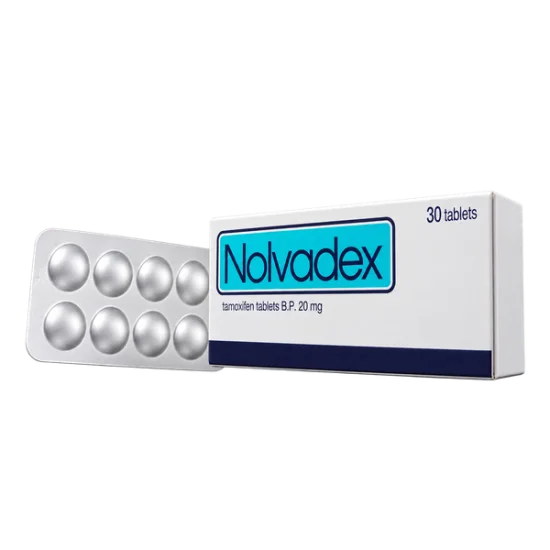
Nolvadex is supplied as oral tablets. The product presentation contains tamoxifen tablets with a 20 mg strength. The amount taken at each intake is set individually rather than being one fixed number for every person.
For breast cancer, treatment schedules are selected by an oncology prescriber according to the indication and treatment plan. Some regimens use daily administration over an extended period, while metastatic disease and risk-reduction protocols may require different decisions. The tablet should be swallowed with water and should not be crushed unless a prescriber or dispensing professional has specifically directed that method.
- Take the prescribed amount at the scheduled time.
- Keep the dosing time consistent from day to day.
- Do not take extra tablets to compensate for a missed dose.
- If the next scheduled dose is near, skip the missed dose and return to the normal timetable.
- Do not stop long-term endocrine therapy abruptly without discussing the treatment plan with the oncology team.
A tablet cutter may not produce equal portions unless the tablet is designed for splitting. This matters when a prescriber has selected an individualized amount. Crushing, chewing, or splitting a tablet without a clear instruction can make accurate dosing harder.
Tamoxifen reaches active metabolite concentrations gradually. It is not designed to provide an immediate change in breast symptoms, testosterone recovery, or tumor-related symptoms after one dose.
Formulation
Nolvadex contains tamoxifen, supplied as tamoxifen citrate in oral tablets. Tamoxifen belongs to the selective estrogen receptor modulator class, abbreviated SERM. This class acts differently in different tissues: tamoxifen blocks estrogen receptors in breast tissue while producing estrogen-like effects in some other tissues. The tissue response varies by organ. This pharmacology explains both its therapeutic use and its adverse-effect profile.
The active substance is not a general estrogen-destroying drug. It changes how estrogen receptors respond to circulating hormones. That distinction matters because tamoxifen can block estrogen activity without lowering blood estradiol to the same degree as an aromatase inhibitor.
Active Ingredient Profile
Tamoxifen citrate is the citrate salt of tamoxifen. After oral absorption, tamoxifen is metabolized into active compounds, including endoxifen, which contributes substantially to its anti-estrogen activity. Genetic differences in CYP2D6 activity and interactions with CYP2D6-inhibiting medicines can affect endoxifen exposure.
The FDA classifies tamoxifen as a hormonal therapy for breast cancer. It is not a chemotherapy cytotoxic agent, although it may be used alongside chemotherapy, radiotherapy, surgery, or other endocrine treatments.
How it affects the body
Tamoxifen is a selective estrogen receptor modulator that blocks estrogen receptors in breast tissue while producing estrogen-like effects in some other tissues. Tamoxifen citrate is metabolized into active compounds, including endoxifen, which contributes substantially to its anti-estrogen activity. The CYP2D6 pathway is clinically relevant because some antidepressants and other medicines inhibit this enzyme, potentially reducing formation of active metabolites.
Therapeutic indications
Tamoxifen is prescribed mainly for estrogen receptor-positive breast cancer. It may be used after surgery as adjuvant endocrine therapy, for metastatic disease, or to reduce the risk of invasive breast cancer in selected people with elevated risk. Receptor testing helps determine whether estrogen signaling is contributing to the cancer’s growth [1].
The treatment decision depends on menopausal status, tumor stage, lymph-node involvement, receptor results, prior treatment, recurrence risk, and other medical factors. Tamoxifen may be used in premenopausal patients and in some postmenopausal patients, while other endocrine therapies may be selected for different clinical situations.
| Clinical setting | Estrogen-related target | Therapeutic purpose |
|---|---|---|
| Hormone receptor-positive breast cancer | Estrogen receptor in breast tissue | Reduce estrogen-driven tumor stimulation |
| Adjuvant endocrine therapy | Residual microscopic hormone-sensitive cells | Lower recurrence risk after primary treatment |
| Metastatic hormone receptor-positive disease | Estrogen receptor in cancer cells | Slow or control disease progression |
The NCI and oncology guidelines describe tamoxifen as a long-term endocrine treatment rather than a short course intended to produce an immediate symptom change. In clinical practice, adherence is a major factor because the benefit develops through sustained receptor blockade.
Common mistakes
Several practical errors can reduce treatment reliability or delay recognition of a serious problem.
- Treating tamoxifen as an aromatase inhibitor and assuming it lowers estradiol directly.
- Taking extra tablets because hot flashes or breast tenderness have not improved quickly.
- Stopping treatment after a few uncomfortable weeks without discussing another endocrine option.
- Ignoring new vaginal bleeding, leg swelling, chest pain, or changes in vision.
- Combining tamoxifen with antidepressants without checking CYP2D6 inhibition.
- Using a bodybuilding protocol as a substitute for evaluation of low testosterone, infertility, or gynecomastia.
- Assuming that a normal-feeling breast means hormone receptor-positive cancer is controlled.
Reasons not to use it
Nolvadex is not appropriate for everyone. The treatment requires careful assessment when a person has a history of blood clots, stroke, severe liver disease, unexplained vaginal bleeding, cataracts, or significant eye disease.
Tamoxifen can interact with warfarin and may increase anticoagulant effects, requiring closer INR monitoring. Strong CYP2D6 inhibitors, including paroxetine, fluoxetine, and bupropion, may reduce formation of active tamoxifen metabolites. Rifampicin and other enzyme-inducing medicines may also alter exposure.
Tamoxifen should not be combined casually with hormone treatments, selective estrogen receptor modulators, or fertility medicines. The interaction may involve estrogen signaling, clotting risk, liver metabolism, or all three. The WHO identifies tamoxifen as an essential medicine in oncology and emphasizes its role within a structured cancer-treatment plan [2].
When this is not for you
This medication is not for you if
- You have an allergy to tamoxifen or an ingredient in the tablet.
- You are taking tamoxifen to reduce breast cancer risk and are pregnant.
- You are using warfarin or another anticoagulant without a coordinated treatment plan.
- You have unexplained vaginal bleeding that has not been evaluated.
- You have had a deep-vein thrombosis or pulmonary embolism and the prescriber has not assessed the current risk.
- You plan to use it solely to manage steroid-related symptoms without understanding the potential endocrine and clotting risks.
Possible side effects
Common tamoxifen effects include hot flashes, night sweats, vaginal dryness or discharge, menstrual changes, nausea, fatigue, headache, mood changes, and joint or muscle discomfort. Some people tolerate the tablets with few problems, while others find vasomotor symptoms disruptive during the first months.
Tamoxifen may also increase the risk of venous thromboembolism, including deep-vein thrombosis and pulmonary embolism. It has been associated with endometrial changes and, rarely, endometrial cancer in people with a uterus. Cataracts and other visual disturbances can occur during treatment.
Seek urgent medical assessment for:
- Sudden shortness of breath or chest pain
- Coughing blood
- One-sided leg swelling, warmth, or pain
- Sudden weakness, facial drooping, or speech difficulty
- Unusual vaginal bleeding after menopause
- New vision loss, flashing lights, or persistent visual distortion
- Severe abdominal pain or yellowing of the skin
One practical detail is easy to miss: hot flashes may be worse at night, so lightweight bedding, layered clothing, and reduced bedroom heat can make adherence easier. Another is that leg pain after a long period of immobility should not automatically be dismissed as a muscle strain when tamoxifen is being used.

Comparison
Tamoxifen belongs to the SERM group. Aromatase inhibitors work through a different pathway by reducing the conversion of androgens into estrogen. Another SERM, clomiphene, has a different clinical role and is not interchangeable with tamoxifen.
| Medicine or category | Main mechanism | Common clinical role |
|---|---|---|
| Tamoxifen | Modulates estrogen receptors; blocks estrogen signaling in breast tissue | Hormone receptor-positive breast cancer and selected risk-reduction plans |
| Aromatase inhibitors | Reduce estrogen synthesis through aromatase inhibition | Selected postmenopausal breast cancer treatment |
| Clomiphene | SERM activity at hypothalamic and pituitary estrogen receptors | Selected ovulatory or endocrine indications under specialist care |
An aromatase inhibitor may be selected when reducing estrogen production is the treatment objective. Tamoxifen may be preferred in situations where receptor blockade is appropriate, including some premenopausal treatment plans. The choice depends on cancer biology, menopausal status, bone health, clotting risk, previous endocrine exposure, and other factors.
Clomiphene and tamoxifen should not be treated as interchangeable PCT products. They have different pharmacology, clinical evidence, and adverse-effect profiles. A protocol copied from another person can be inappropriate even when the symptoms appear similar.
What doctors say
Oncologists generally frame tamoxifen as a long-term risk-management treatment rather than a tablet that produces a noticeable effect within hours. The treatment goal may be recurrence reduction, disease control, or risk reduction, and each goal requires a different discussion of duration and monitoring.
Doctors also pay close attention to adherence barriers. Hot flashes, sleep disruption, vaginal symptoms, mood changes, and fear of long-term side effects can lead people to stop treatment without telling the oncology team. A planned switch to another endocrine option may be possible in some cases, while stopping without an alternative can remove protection against hormone-driven disease.
For PCT, an endocrinologist would usually separate breast-tissue receptor blockade from restoration of testosterone production. Tamoxifen may influence symptoms in the chest, but it does not guarantee recovery of sperm production, testosterone, or fertility. Endocrine testing is more informative than assuming that a fixed PCT schedule suits every person.
Comparison
Common questions
Does Nolvadex cause hot flashes?
Hot flashes are a recognized tamoxifen effect because changes in estrogen signaling can influence temperature regulation. The 2023 FDA prescribing information lists vasomotor symptoms among common adverse reactions, and clinical guidance from the National Cancer Institute discusses them as a frequent reason for treatment discomfort. Cooling the bedroom, dressing in layers, and limiting personal triggers may help, while persistent symptoms can be managed through an oncology-led plan.
What should happen if the expected result does not come?
A lack of immediate symptom change does not prove that tamoxifen is failing, because endocrine treatment is assessed through the original clinical goal, imaging, pathology, laboratory findings, or recurrence-risk planning. The 2022 American Society of Clinical Oncology guidance supports treatment decisions based on disease characteristics and follow-up findings rather than symptoms alone. New breast symptoms, worsening pain, or suspected progression require prompt review of the treatment plan.
What should happen after a missed dose?
Take the missed tablet when remembered unless the next scheduled dose is close; in that case, skip it and resume the regular schedule. The 2023 FDA label advises against doubling the next dose because extra tamoxifen can increase exposure without restoring a missed treatment interval. A repeated pattern of missed doses should be discussed with the oncology team because reminders, timing changes, or a different routine may improve adherence.
How soon does the effect become noticeable?
Tamoxifen is not an immediate symptom-relief tablet. Endocrine effects develop through ongoing receptor modulation, while cancer-treatment benefit is assessed over follow-up rather than by a sensation after the first tablet. The 2023 EMA product information describes prolonged tamoxifen exposure and supports allowing the prescriber’s monitoring plan, rather than judging the treatment after only a few days.
Is Nolvadex suitable for older adults?
Older adults may receive tamoxifen when the expected oncology benefit outweighs the risks, but age-related clotting, eye, liver, bone, and cardiovascular factors deserve attention. The 2023 FDA geriatric information does not make age alone an automatic exclusion. A medication review is useful because anticoagulants, antidepressants, and medicines affecting liver enzymes can alter the risk profile.
Can Nolvadex affect driving, concentration, or machinery work?
Tamoxifen can cause fatigue, dizziness, visual changes, or headache in some people, and these symptoms may impair driving or machinery work. The 2023 UK medicines regulator and EMA safety information emphasize caution when a medicine produces visual or neurological symptoms. Do not drive or operate machinery if vision is altered, dizziness is significant, or concentration is impaired.
Do you offer anonymous delivery?
Your order will be securely packed and shipped within 24 hours. This is exactly what your package will look like (images of an actual item sent). It has the size and look of a regular private letter (9.4x4.3x0.3 in.) and its contents cannot be seen.
Post-Cycle Therapy and Estrogen Regulation
Some athletes use Nolvadex in post-cycle therapy, commonly called PCT, after anabolic-androgenic steroid use. This is an off-label practice and is separate from the FDA-approved indications for breast cancer. Tamoxifen may block estrogen receptors in breast tissue, which can reduce breast tenderness or enlargement associated with gynecomastia.
That receptor blockade does not remove excess estradiol from the bloodstream. It also does not reliably restore the hypothalamic-pituitary-gonadal axis after every steroid regimen. Recovery depends on the substances used, duration, dose exposure, baseline health, sleep, body composition, testicular function, and the presence of liver or endocrine disease.
Mechanism of Gynecomastia Prevention
Gynecomastia involves glandular breast tissue enlargement in response to an imbalance between estrogenic and androgenic signaling. Tamoxifen competes with estrogen at breast-tissue receptors, so estrogen may have less stimulatory effect in that tissue.
This does not make tamoxifen a universal preventive treatment. It cannot correct every cause of breast enlargement, and a firm, painful, rapidly growing mass needs clinical assessment because gynecomastia can have causes unrelated to steroid use.
Endocrine recovery is also difficult to judge by symptoms alone. Libido, mood, testicular size, erectile function, and energy can fluctuate for reasons unrelated to estradiol. Laboratory assessment may include testosterone, estradiol, luteinizing hormone, follicle-stimulating hormone, liver enzymes, and other tests selected by the prescriber.
Customer Feedback on Nolvadex
Sources
- National Cancer Institute (2024). Tamoxifen: Drug Information and Breast Cancer Treatment Information.
- World Health Organization (2023). WHO Model List of Essential Medicines.