Skip to content

Black Friday +8 free tablets with every order Nov 19 – Dec 2

Clomid

Clomid

Active ingredient: Clomiphene

4 3 reviews In stock Overview
Package

$31.30

$51.08 $62.60 Save 18%

$63.44 $93.90 Save 32%

$70.85 $125.20 Save 43%

$98.05 $187.80 Save 48%

Black Friday +8 free tablets with every order until Dec 2

Delivery: 4-7 business days

Clomid tablets stimulate the hormonal signals that encourage ovulation in suitable patients. Treatment is usually organized into short, monitored cycles.

Overview

Clomiphene citrate, the active ingredient of Clomid, is a selective estrogen receptor modulator used for ovulatory dysfunction and female infertility.

Active Ingredient and Pharmacological Class

The active ingredient is clomiphene citrate. The medicine belongs to the selective estrogen receptor modulator class, often abbreviated as SERM.

Dosage and administration

Clomid dosing differs between strengths and between users, so there is no single amount that suits everyone. The product is taken only according to the prescribed cycle plan.

Clinical protocols use a tablet during a specified part of the menstrual cycle. The prescriber determines the regimen and timing for each patient. Dose changes in later cycles require medical assessment.

Standard Starting Regimens

A fertility specialist may determine:

  • The first day of the cycle
  • The starting cycle day for Clomid
  • The daily tablet strength
  • Whether the same regimen should be repeated
  • Whether the dose should change after an absent response
  • The maximum number of treatment cycles considered appropriate

Do not extend the prescribed course independently. Taking extra tablets does not reliably improve ovulation and may increase adverse effects, ovarian enlargement, and the chance of multiple pregnancy.

If a dose is missed, follow the prescriber’s specific instruction rather than doubling the next dose. A missed tablet can alter the planned cycle, so the timing should be clarified before the remaining tablets are taken.

Monitoring Ovulation and Fertile Timing

Sexual activity or insemination is usually timed around the expected fertile window. A fertility clinician may adjust the plan based on follicle size, hormone results, cervical mucus, semen analysis, and the number of developing follicles.

Record the first day of full menstrual bleeding, not light spotting, as cycle day one unless the fertility clinic uses a different definition. A one-day error can shift the entire treatment schedule.

Formulation

Clomid contains clomiphene citrate, a nonsteroidal selective estrogen receptor modulator. It is taken as an oral tablet during fertility treatment, mainly when infertility is linked to ovulatory dysfunction. Polycystic ovary syndrome (PCOS) is one condition in which irregular or absent ovulation may require medical induction.

Clomiphene is not an external reproductive hormone. It changes how estrogen feedback is interpreted by the hypothalamus, allowing the pituitary gland to increase reproductive hormone signaling. The FDA labeling for clomiphene describes its use for ovulatory failure in appropriately selected patients [1].

Active Ingredient and Pharmacological Class

The active ingredient is clomiphene citrate. The medicine belongs to the selective estrogen receptor modulator class, often abbreviated as SERM.

Its fertility effect comes from influencing estrogen receptors in the hypothalamus. The resulting hormonal response can support follicular development and ovulation when the ovaries retain the capacity to respond.

Clomid does not treat every cause of infertility. It is most relevant when ovulation is infrequent or absent and other fertility factors have been assessed.

Primary Medical Indications

Clomid may be prescribed for:

  • Ovulatory dysfunction
  • Anovulatory infertility
  • Irregular ovulation associated with PCOS
  • Selected cases of female infertility where ovulation induction is appropriate
  • Some off-label male fertility or endocrine uses under specialist supervision

The medicine cannot correct blocked fallopian tubes, severe ovarian insufficiency, or a major male-factor problem by itself. Fertility treatment works best when the cause of delayed conception has been identified.

Clomid is intended for a defined treatment cycle, not continuous daily use throughout the month. Cycle dates matter because the tablet course and the expected fertile window are connected.

How it affects the body

Clomiphene citrate acts mainly by reducing estrogen feedback at the hypothalamus. The hypothalamus then releases more gonadotropin-releasing hormone, which signals the pituitary gland to increase follicle-stimulating hormone and luteinizing hormone production.

Estrogen Receptor Blockade at the Hypothalamus

The hypothalamus normally uses estrogen levels as part of its feedback system. When clomiphene occupies estrogen receptors, the brain receives a weaker estrogen signal than the circulating hormone level would suggest.

That change encourages a stronger reproductive hormone signal. The response is indirect. Clomid does not supply follicle-stimulating hormone.

Gonadotropin Secretion and Follicular Development

The pituitary gland releases follicle-stimulating hormone, or FSH, which supports follicular growth in the ovary. As a follicle matures, estrogen production rises. A subsequent luteinizing hormone, or LH, surge can trigger ovulation.

The process can be summarized as:

  1. Clomiphene changes estrogen feedback at the hypothalamus.
  2. Gonadotropin-releasing hormone signaling increases.
  3. The pituitary gland releases more FSH and LH.
  4. A follicle may mature and produce an ovulatory response.

A follicle may not respond if ovarian reserve is markedly reduced or if another endocrine disorder remains untreated. The American Society for Reproductive Medicine describes ovulation induction as a monitored process rather than a guaranteed response [2].

A home ovulation test can help identify an LH surge, but it does not prove that an egg was released. Ultrasound monitoring and, when appropriate, progesterone testing provide stronger clinical confirmation.

Therapeutic indications

Clomid may be prescribed for:

  • Ovulatory dysfunction
  • Anovulatory infertility
  • Irregular ovulation associated with PCOS
  • Selected cases of female infertility where ovulation induction is appropriate
  • Some off-label male fertility or endocrine uses under specialist supervision

Common mistakes

Several practical errors can reduce the value of a carefully planned cycle:

  • Starting the tablets on the wrong cycle day
  • Taking extra tablets after a missed dose
  • Continuing beyond the prescribed five-day course
  • Using Clomid without confirming that pregnancy is absent
  • Ignoring severe pelvic pain or rapid abdominal swelling
  • Treating an ovulation-test result as proof of ovulation
  • Continuing treatment after new visual disturbances
  • Assuming that a higher dose automatically improves fertility
  • Failing to report liver disease, ovarian cysts, abnormal uterine bleeding, or thyroid problems
  • Using testosterone at the same time when preserving sperm production is a goal

Clomid should not be taken during pregnancy. Pregnancy testing and cycle planning are therefore central parts of treatment.

A small but meaningful detail: keep the cycle calendar separate from the medication calendar. The first day of bleeding, the five tablet days, the expected fertile window, and any monitoring appointment should each be recorded.

Reasons not to use it

Clomid is not suitable for everyone. It should not be used in the following situations:

  • Current pregnancy
  • Liver disease or a history of significant liver dysfunction
  • Unexplained abnormal uterine bleeding
  • Uncontrolled thyroid or adrenal disease
  • Ovarian cysts unrelated to PCOS
  • Uncontrolled ovarian enlargement
  • Previous serious hypersensitivity to clomiphene or an excipient
  • A condition in which pregnancy would be medically unsafe
  • Visual symptoms that developed during an earlier clomiphene course

Clomid is also inappropriate when infertility is unrelated to ovulatory dysfunction unless a reproductive specialist has identified a specific reason for its use.

Important interactions and precautions include:

  • Tell the prescriber about medicines used for liver disease, hormone treatment, and fertility treatment.
  • Report severe headaches, visual symptoms, pelvic pain, shortness of breath, or rapid weight gain.
  • Avoid further doses if pregnancy is suspected until the treatment plan has been reviewed.
  • Breastfeeding should not continue during clomiphene treatment because the drug may reduce lactation and its effect on a nursing infant is not adequately established.

When this is not for you

Clomid is NOT for you if you are pregnant, have significant liver disease, unexplained bleeding, or a condition that makes pregnancy unsafe.

The drug may enlarge the ovaries. Ovarian enlargement can persist after the final tablet, so severe symptoms later in the cycle still require medical assessment.

Possible side effects

Clomid can cause hot flashes, headaches, breast tenderness, nausea, bloating, abdominal discomfort, and mood changes. These effects reflect hormonal activity and often occur during the treatment cycle or shortly afterward.

Common tolerability issues include:

  • Vasomotor flushing or hot flashes
  • Headache
  • Nausea
  • Abdominal bloating or pelvic discomfort
  • Breast tenderness
  • Mood swings or irritability
  • Fatigue
  • Visual symptoms

The FDA prescribing information warns about ovarian enlargement, ovarian hyperstimulation, multiple pregnancy, and visual disturbances associated with clomiphene treatment [3].

Common Vasomotor and Physical Reactions

Hot flashes may appear suddenly and can be more noticeable at night. Loose clothing, a cooler bedroom, and limiting personal triggers such as alcohol or very hot drinks may make them easier to manage.

Bloating and pelvic pressure require attention when they become pronounced, persistent, or painful. A rapidly increasing abdominal size, severe pelvic pain, vomiting, or shortness of breath can indicate a significant ovarian response and requires urgent medical assessment.

Mood changes can be difficult to distinguish from the emotional strain of fertility treatment. New severe depression, agitation, or thoughts of self-harm require immediate help.

Visual Symptoms and Multiple Gestation

Blurred vision, flashes, spots, or increased sensitivity to light are clinically significant. Stop taking further tablets and obtain urgent medical advice if acute visual changes occur. Continuing after visual symptoms may increase the risk of persistent visual problems.

Clomid raises the likelihood of twins and other multiple pregnancies because more than one follicle may ovulate. The chance of twins is commonly described as approximately 5–10% in clinical information, while higher-order multiples are uncommon. A multiple pregnancy carries increased risks of premature birth, pregnancy-related hypertension, and gestational complications.

Visual symptoms can begin during treatment or afterward. They should not be dismissed as ordinary eye strain.

Comparison

When ovulation does not occur after an appropriately monitored regimen, clinicians may describe the situation as Clomid resistance. The next step depends on the cause of anovulation, ovarian reserve, metabolic health, semen analysis, and the presence of tubal disease.

Treatment approach Main mechanism or route Typical clinical role
Clomid Oral estrogen-receptor modulation Ovulation induction in selected patients
Letrozole Oral aromatase inhibition Frequently considered for anovulation linked to PCOS
Gonadotropins Injectable FSH or related hormones Escalation when oral induction is unsuccessful or unsuitable

Letrozole as a First-Line Alternative

Letrozole reduces estrogen production temporarily by inhibiting aromatase. Lower estrogen feedback can increase FSH signaling, which may promote follicular development.

For many patients with PCOS, reproductive endocrinology guidance favors letrozole as an initial oral ovulation-induction option. Clomid remains clinically useful, especially when a prescriber considers its response pattern, prior treatment history, and patient-specific factors.

Letrozole is not automatically better for every patient. The choice depends on diagnosis, ovulatory history, endometrial response, cervical mucus effects, and the fertility clinician’s protocol.

Injectable Gonadotropins and Advanced Protocols

Gonadotropins directly provide follicle-stimulating activity through injections. They can stimulate several follicles and require close ultrasound and hormone monitoring.

The main limitation is a greater risk of ovarian hyperstimulation and multiple pregnancy. Treatment may also involve more appointments and a more complex administration schedule than oral therapy.

Metformin may be used in selected patients with PCOS, especially when insulin resistance or metabolic abnormalities are present. It is not a universal substitute for Clomid and does not directly induce ovulation in the same way.

If Clomid produces several mature follicles, increasing the dose in the next cycle may be unsafe. More follicles do not always mean a better outcome; they can raise the chance of a high-risk multiple pregnancy.

What doctors say

In clinical practice, fertility specialists usually set expectations around ovulation rather than pregnancy alone. Clomid can trigger ovulation in a patient who was not releasing an egg regularly, but conception also depends on sperm quality, tubal patency, endometrial response, age, and intercourse timing.

Doctors often assess the first treatment cycle carefully. They look for follicular development, excessive ovarian response, endometrial thickness, and signs that the selected dose is producing the intended response.

A common prescribing mistake is to treat the tablet strength as the main determinant of success. The diagnosis matters more. Clomid may work well for anovulation caused by a reversible endocrine pattern, while it cannot overcome every ovarian, tubal, uterine, or sperm-related cause of infertility.

The World Health Organization and the American College of Obstetricians and Gynecologists emphasize evaluation of infertility as a condition affecting one or both partners, rather than assuming that ovulation is the only factor involved [4].

Comparison

Clomid Current

Active ingredient: Clomiphene
100mg
From $31.30
pills
4 (3)

Clomiford

Active ingredient: Clomiphene
25mg 100mg
From $43.83
pills
3.8 (5)

Clomisign

Active ingredient: Clomiphene
50mg
From $55.67
pills
3.9 (5)

Comparison table: Infertility

Common questions

Can Clomid be used during pregnancy or breastfeeding?

Clomid should not be taken during pregnancy because it is intended to induce ovulation before conception, not to support an established pregnancy. The FDA prescribing information from 2012 also describes breastfeeding concerns because clomiphene may reduce milk production and infant exposure has not been adequately established. If pregnancy occurs during a planned cycle, no further tablets should be taken until the treatment team reviews the situation. Breastfeeding treatment requires a separate risk assessment. The FDA labeling from 2012 should be reviewed with the treating clinician.

Does Clomid cause visual disturbances?

Yes, clomiphene can cause blurred vision, flashes, spots, or other visual disturbances. The FDA described visual symptoms in its 2012 labeling as a reason to stop further treatment and seek prompt assessment because continued exposure may increase the risk of persistent problems. Symptoms can appear during the course or after the tablets are finished. Ordinary tired eyes should not be used to explain away a new or unusual visual change.

What is the best time of day to take Clomid?

There is no universal time of day that makes Clomid work better. A fertility clinician may prefer morning or evening dosing to make the five-day course easier to follow, and taking it at a consistent time can reduce missed tablets. The FDA labeling reviewed in 2024 supports cycle-based administration rather than a specific clock time . If nausea occurs, taking the tablet with food may be more comfortable unless the prescriber has given different instructions.

What happens when Clomid is stopped, and does it require tapering?

Clomid is generally taken in short cycles and does not usually require tapering after the planned course. Its hormonal effect decreases after treatment, although ovarian enlargement or visual symptoms can continue and require assessment. Guidance from the American Society for Reproductive Medicine in 2023 supports reassessing the response before repeating or changing an ovulation-induction cycle . Stopping early because of severe symptoms is different from completing the planned five-day course and should be reported promptly.

Can anyone under 18 use Clomid?

Clomid is not a routine treatment for children or adolescents. Its established fertility indication concerns ovulatory dysfunction in adult women, while male adolescent use is specialist and off-label. The FDA prescribing information from 2012 does not establish routine pediatric use. A person under 18 should not take clomiphene for fertility, testosterone, or athletic purposes without specialist endocrine care.

How does Clomid differ from letrozole?

Clomid blocks estrogen feedback at the hypothalamus, while letrozole lowers estrogen production through aromatase inhibition. Both can increase FSH signaling, but their effects on cervical mucus and the uterine lining may differ. The American Society for Reproductive Medicine identified letrozole as a preferred oral option for many patients with PCOS in its 2023 guidance . Clomid remains useful when its mechanism and prior response fit the patient’s treatment plan.

Do you offer anonymous delivery?

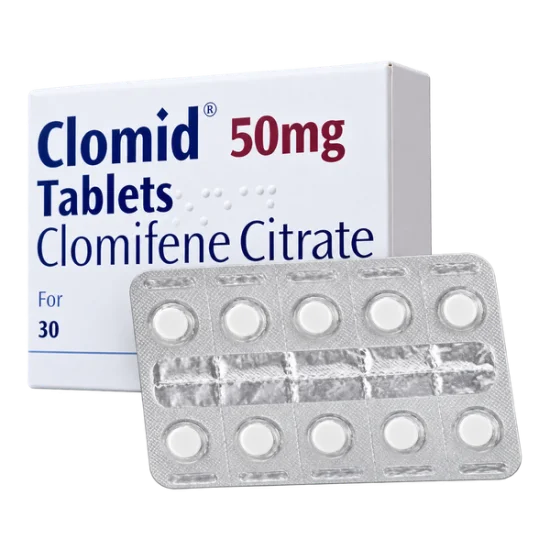
Your order will be securely packed and shipped within 24 hours. This is exactly what your package will look like (images of an actual item sent). It has the size and look of a regular private letter (9.4x4.3x0.3 in.) and its contents cannot be seen.

Customer Feedback on Clomid

4 Based on 3 reviews
Catherine, 33 San Antonio One monitored cycle
Oct 12, 2026
Rating: 5 out of 5
I used the prescribed dose of Clomid for one monitored cycle and had a clear ovulation result afterward. The timing was easy to follow once I marked the tablet days on my calendar, and I felt satisfied with how structured the treatment was.
Lucy N., 57 San Diego One cycle
Oct 27, 2026
Rating: 2.5 out of 5
I used the prescribed dose of Clomid for one cycle, but it did not help me ovulate. I also developed uncomfortable bloating and stopped after speaking with my doctor, who discussed a different approach instead.
Hannah, 66 Boston One planned fertility cycle
Nov 8, 2026
Rating: 4.5 out of 5
I took the prescribed dose of Clomid for one planned fertility cycle and found the short tablet course manageable. The main benefit for me was having a clearer ovulation window rather than taking tablets every day.

Sources

  1. U.S. Food and Drug Administration (2012). Clomid (clomiphene citrate) Prescribing Information
  2. American Society for Reproductive Medicine (2023). Evidence-based treatments for couples with unexplained infertility: a guideline
  3. U.S. Food and Drug Administration (2012). Clomiphene citrate labeling: warnings, precautions, and adverse reactions
  4. World Health Organization (2023). Infertility
Get our free app Shop faster and track your orders 4.0 · 378 reviews Install