- Worldwide Delivery
- Quality Guaranteed
- Bonus pills
- 24/7 Support
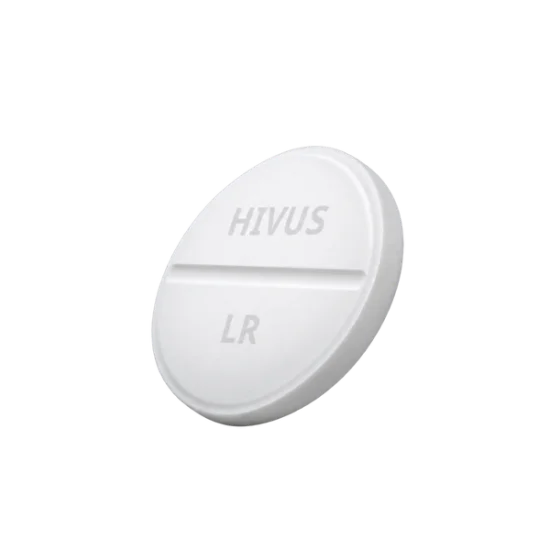
Patients living with HIV may be prescribed Hivus LR as part of combination antiretroviral therapy. Hivus LR contains lopinavir and ritonavir, which inhibit HIV protease and help reduce viral replication. Treatment aims to maintain viral suppression, preserve immune function, and lower the risk of HIV-related complications.
Overview
Hivus LR is a fixed-dose antiviral tablet containing lopinavir and ritonavir. Both substances belong to the HIV protease inhibitor class. The combination is used with other HIV drugs rather than as a standalone cure for established HIV infection.
Dosage and administration
The regimen for the chosen strength must be confirmed with a healthcare professional before starting. Dose selection depends on age, treatment history, formulation, interacting medicines, pregnancy status, and liver function.
Scheduled Administration
- Take Hivus LR exactly according to the prescribed regimen.
- Use consistent dosing times to reduce missed doses.
- Swallow the tablet as directed for the specific formulation.
- Follow the applicable food instruction for that formulation.
- Continue the other HIV drugs included in the prescribed combination.
- Do not change the dose, stop treatment, or share tablets with another person.
The regimen may require adjustment when other medicines are added or stopped. This is especially relevant with ritonavir because its enzyme and transporter effects can persist after a dose change.
Missed Dose and Adherence Management
If a dose is missed, follow the missed-dose instructions provided for the prescribed regimen. Do not automatically double the next dose. If several doses are missed, contact the treating HIV clinician promptly because repeated interruptions can affect viral suppression and resistance risk.
If vomiting occurs after a dose, the correct action depends on how soon vomiting occurred and on the formulation. Obtain individualized instructions from the treating clinician or pharmacist rather than repeating the dose automatically.
For suspected overdose, contact a poison center or emergency service promptly. Severe dizziness, fainting, unusual heartbeat, extreme weakness, or loss of consciousness requires urgent medical attention.
Formulation
Hivus LR is a fixed-dose antiviral tablet containing lopinavir and ritonavir. Both substances belong to the HIV protease inhibitor class. The combination is used with other HIV drugs rather than as a standalone cure for established HIV infection.
| Component | Pharmacological role | Treatment effect |
|---|---|---|
| Lopinavir | HIV protease inhibitor | Prevents maturation of infectious HIV particles |
| Ritonavir | Protease inhibitor and pharmacokinetic booster | Increases lopinavir exposure and also affects many other medicines |
Product Strength and Formulation
Hivus LR is described as a tablet formulation containing lopinavir and ritonavir. The regimen for the chosen strength must be confirmed with a healthcare professional before starting.
Do not assume that every lopinavir-and-ritonavir tablet has the same strength, excipient profile, or food instructions. Do not split, crush, or chew the tablet unless the instructions for that formulation specifically allow it.
How it affects the body
Lopinavir blocks HIV protease, an enzyme that HIV needs to assemble mature infectious particles. Ritonavir also inhibits protease, but its key role in this combination is pharmacokinetic boosting: it slows the breakdown of lopinavir and increases its exposure in the body. The same enzyme effects create a significant interaction burden.
Lopinavir and Ritonavir Pharmacology
HIV protease cuts newly formed viral proteins into functional parts. Without this step, new virus particles remain immature and cannot spread efficiently. Lopinavir interferes with this process.
Ritonavir strengthens the regimen by inhibiting CYP3A-mediated metabolism, which can increase lopinavir concentrations. This boosting effect is useful pharmacologically, yet it explains why ritonavir can also produce clinically significant interactions with sedatives, antiarrhythmics, anticonvulsants, anticoagulants, and other treatments.
The FDA prescribing information for lopinavir and ritonavir describes the combination as an antiretroviral treatment for HIV infection and provides detailed interaction warnings [1].
Therapeutic indications
Hivus LR helps suppress HIV replication as part of combination antiretroviral therapy. Lower viral replication supports immune preservation and reduces the risk of HIV-related illness. Treatment response is assessed through laboratory monitoring rather than symptoms alone.
HIV infection and AIDS are related but distinct clinical terms. HIV is the infection caused by the human immunodeficiency virus. AIDS describes advanced HIV-related immune damage or specific opportunistic illnesses. Sustained antiretroviral therapy can prevent or delay progression to AIDS, but Hivus LR does not eradicate HIV from the body. The National Institutes of Health also identifies durable viral suppression as a central goal of HIV treatment.
A viral load measures the amount of HIV genetic material in blood. A CD4 count estimates the number of key immune cells available to help defend against infection. Clinicians use both results, alongside treatment history and resistance testing, to assess the regimen.
Combination treatment matters. Using Hivus LR without the other medicines prescribed for the regimen can reduce antiviral coverage and allow resistance to develop. Lamivudine is used in some separate HIV combinations, but it is not an ingredient of Hivus LR.
The United States Department of Health and Human Services explains that sustained viral suppression reduces the risk of sexual HIV transmission when confirmed and maintained through appropriate testing [2].
Common mistakes
- Assuming symptom improvement means HIV is cured. Viral suppression is measured with laboratory testing, not by symptoms.
- Treating one missed dose as harmless when missed doses become frequent. Repeated interruptions can permit viral replication and resistance.
- Doubling the next dose. This can increase adverse-effect risk without restoring the intended treatment pattern.
- Taking over-the-counter medicines without disclosure. Nonprescription products can still interact with ritonavir.
- Adding herbal supplements without review. St. John’s wort is a relevant example of an interaction concern.
- Stopping treatment abruptly. This can compromise viral suppression.
- Sharing tablets. HIV regimens are individualized, and shared treatment can be ineffective or unsafe.
- Skipping viral-load appointments. Laboratory monitoring confirms whether treatment is working.
- Crushing or splitting tablets without permission. Altering the dosage form may change drug release or dose delivery.
Reasons not to use it
Hivus LR is not for you if you have had a serious allergic reaction to lopinavir, ritonavir, or an ingredient in the prescribed formulation. It also requires careful clinical review when there is significant liver disease, previous pancreatitis, a heart-rhythm disorder, diabetes, or a lipid disorder.
Ritonavir strongly affects CYP3A and other metabolic or transport pathways. Interaction screening is needed before combining Hivus LR with:
- Certain sedatives and hypnotics
- Some antiarrhythmic medicines
- Certain anticonvulsants
- Some anticoagulants and antiplatelet medicines
- Selected cholesterol-lowering treatments
- Certain medicines for erectile dysfunction or pulmonary hypertension
- Some corticosteroids
- Herbal products such as St. John’s wort
- Other antiretroviral medicines
The European Medicines Agency provides product information for lopinavir and ritonavir that includes contraindication and interaction warnings [4].
When this is not for you
Liver disease can increase exposure to lopinavir and ritonavir and may increase toxicity risk. A history of pancreatitis matters because lipid changes or direct drug effects may contribute to recurrence. Diabetes may require closer glucose monitoring.
Pregnancy and breastfeeding require an individualized HIV-treatment review. The clinician weighs viral suppression, maternal health, fetal or infant considerations, and the available regimen.
Do not start or stop an interacting medicine independently.
Possible side effects
Lopinavir and ritonavir can cause gastrointestinal, metabolic, hepatic, cardiovascular, and allergic adverse effects. A symptom may also result from HIV, another medicine, an infection, or an unrelated condition.
Common Adverse Effects
Reported effects include:
- Diarrhea or loose stools
- Nausea
- Abdominal discomfort
- Vomiting
- Headache
- Changes in cholesterol or triglyceride levels
- Altered glucose control
- Skin rash
Some people experience digestive symptoms early in treatment and improve as the body adjusts. Persistent diarrhea can cause dehydration and may affect adherence, so ongoing symptoms deserve clinical review.
Metabolic monitoring may include lipid testing and glucose assessment, especially for people with diabetes, cardiovascular disease, or pre-existing lipid disorders.
Serious Safety Signals
Urgent medical evaluation is needed for:
- Severe or persistent abdominal pain, especially with vomiting
- Yellowing of the skin or eyes
- Dark urine or marked fatigue
- Fainting, palpitations, or a markedly irregular heartbeat
- Blistering, peeling, or widespread rash
- Facial swelling, wheezing, or breathing difficulty
- Severe weakness or confusion
These symptoms can signal pancreatitis, liver injury, a serious hypersensitivity reaction, or a cardiac rhythm problem. The product information for lopinavir and ritonavir describes these risks and the need for clinical assessment [3].
Clinical Monitoring
Clinicians may review:
- Viral load and CD4 count
- Liver enzymes and liver function
- Cholesterol and triglycerides
- Blood glucose when relevant
- Heart rhythm risk
- The complete medication and supplement list
A previously tolerated medicine can become unsafe after ritonavir is introduced if its blood concentration rises. This interaction pattern is one of the most important practical safety issues with boosted protease-inhibitor treatment.

Comparison
HIV treatment is selected according to resistance results, previous therapy, organ function, pregnancy status, coexisting illnesses, interaction risk, and current treatment guidelines. A protease-inhibitor combination can be useful in selected situations, while other regimens may offer a different interaction or metabolic profile.
| Treatment approach | Main pharmacological feature | Key clinical consideration |
|---|---|---|
| Hivus LR combination | Protease inhibition with ritonavir boosting | Strong interaction screening and metabolic monitoring |
| Nucleoside reverse-transcriptase inhibitor combination | Blocks viral reverse transcription | Often used as part of a broader combination regimen |
| Integrase-inhibitor-based approach | Blocks integration of viral DNA into host DNA | Selection depends on resistance, interactions, and patient factors |
Lopinavir and ritonavir can provide potent antiviral activity, yet boosted protease-inhibitor regimens may create more interaction and lipid-management considerations than some newer approaches. That limitation does not make the regimen unsuitable; it means treatment selection must match the individual clinical situation.
Lamivudine is a nucleoside reverse-transcriptase inhibitor used in some HIV combinations. Adding lamivudine to Hivus LR is not automatically appropriate and should only occur within a prescribed regimen.
What doctors say
In clinical practice, doctors focus first on durable viral suppression rather than a short-term change in symptoms. They review the treatment history, resistance results, kidney and liver function, pregnancy status when relevant, and every medicine or supplement used.
A clinician may also ask about alcohol intake, recreational substances, changes in diet, and adherence barriers. These questions are practical because missed doses and interactions can affect viral control even when the patient feels well.
The World Health Organization describes antiretroviral therapy as lifelong treatment that requires adherence, monitoring, and regimen adjustment when clinical circumstances change [5].
Doctors also watch for treatment-limiting diarrhea, lipid changes, liver abnormalities, pancreatitis symptoms, and rhythm-related symptoms. A patient who reports new medicines or supplements should receive an interaction review before adding them to the routine.
Comparison
Common questions
How does Hivus LR differ from HIV treatment based on another mechanism?
Hivus LR combines the protease inhibitor lopinavir with ritonavir, which boosts lopinavir exposure. Other HIV regimens may target reverse transcription or viral integration instead. FDA treatment information reviewed in 2025 describes regimen selection as dependent on treatment history, resistance, interactions, and patient-specific factors. The different mechanism does not make one approach suitable for every person.
Which diet, exercise, or habits can help treatment work well?
A regular dosing routine, adequate hydration, balanced nutrition, and appropriate physical activity can support general health during HIV treatment. Diet and exercise do not replace antiretroviral therapy or directly remove HIV from the body. WHO guidance available in 2025 continues to emphasize adherence, clinical monitoring, and healthy living alongside treatment. Avoiding chaotic dosing schedules is more clinically relevant than pursuing a special diet.
Is Hivus LR appropriate for anyone under 18?
Use in children and adolescents requires an age- and weight-appropriate regimen selected by an HIV specialist. The tablet strength, formulation, swallowing ability, organ function, and interacting medicines all matter. Pediatric HIV guidance from the U.S. Department of Health and Human Services in 2025 supports individualized dosing and monitoring rather than applying an adult schedule automatically. A child or teenager should not receive tablets prescribed for another person.
Can alcohol be used while taking Hivus LR?
Alcohol can worsen nausea, diarrhea, dizziness, and dehydration, and heavy use can place additional stress on the liver. It may also interfere with adherence by disrupting the daily routine. FDA safety information reviewed in 2025 identifies liver monitoring and interaction assessment as relevant to lopinavir and ritonavir treatment. The treating clinician should review alcohol use when liver disease, pancreatitis, or other medicines are present.
What should happen after a missed dose or application?
Do not double the next dose unless a treating clinician specifically instructs you to do so. Follow the prescribed regimen’s missed-dose directions, and seek prompt clinical advice if several doses have been missed. WHO adherence guidance from 2025 supports rapid attention to repeated interruptions because inconsistent therapy can permit viral replication and resistance. For an overdose or severe symptoms, contact a poison center or emergency service immediately.
Do you offer anonymous delivery?
Your order will be securely packed and shipped within 24 hours. This is exactly what your package will look like (images of an actual item sent). It has the size and look of a regular private letter (9.4x4.3x0.3 in.) and its contents cannot be seen.
Customer Feedback on Hivus LR
Sources
- U.S. Food and Drug Administration (2023). Kaletra (lopinavir/ritonavir) Prescribing Information.
- U.S. Department of Health and Human Services (2024). Guidelines for the Use of Antiretroviral Agents in Adults and Adolescents with HIV.
- U.S. Food and Drug Administration (2023). Kaletra (lopinavir/ritonavir) Medication Guide.
- European Medicines Agency (2017). Kaletra: Summary of Product Characteristics.
- World Health Organization (2024). Consolidated Guidelines on HIV Prevention, Testing, Treatment, Service Delivery and Monitoring.