Skip to content

Black Friday +8 free tablets with every order Nov 19 – Dec 2

Ampicillin

Ampicillin

Active ingredient: Ampicillin

3.8 5 reviews In stock Overview
Dosage
Package
Package

$33.98

$36.04 $45.31 Save 20%

$49.43 $67.96 Save 27%

$65.91 $101.94 Save 35%

$32.95

$59.73 $65.90 Save 9%

$81.36 $98.85 Save 18%

$96.81 $131.80 Save 27%

$131.83 $197.70 Save 33%

Black Friday +8 free tablets with every order until Dec 2

Delivery: 4-7 business days

Ampicillin blocks bacterial cell-wall construction, helping treat susceptible infections caused by certain Gram-positive and Gram-negative bacteria. Ampicillin capsules are used for selected bacterial infections when the organism is sensitive to this penicillin-class antibiotic. It does not treat viral illnesses such as influenza or the common cold.

Overview

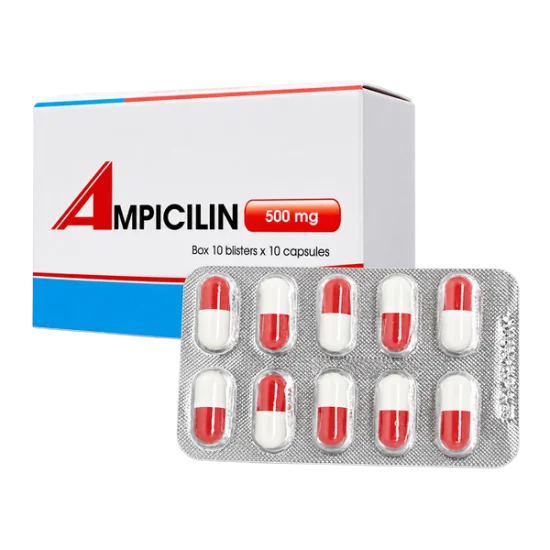
Ampicillin is a beta-lactam antibiotic in the penicillin family. It acts as a bactericidal antimicrobial agent, meaning it kills susceptible bacteria rather than merely slowing their growth. The active substance is ampicillin, supplied here as oral capsules.

Ampicillin is prescribed for bacterial infections involving organisms known or expected to respond to the drug. The choice depends on the infection site, bacterial susceptibility, kidney function, allergy history, and local resistance patterns. The FDA identifies ampicillin as an antibacterial agent for susceptible infections involving respiratory, urinary, gastrointestinal, and other sites [1].

Therapeutic indications in clinical practice

Clinical uses may include susceptible infections caused by organisms such as:

  • Certain streptococcal infections
  • Selected enterococcal infections
  • Some respiratory tract infections
  • Susceptible urinary tract infections
  • Certain gastrointestinal infections
  • Listeria monocytogenes infections in appropriate clinical situations
  • Other infections confirmed or strongly suspected to involve sensitive bacteria

Ampicillin does not work against viruses. Taking it for a cold, influenza, or most viral sore throats will not shorten the illness and may expose the person to avoidable adverse effects.

A useful detail for a prescriber is the exact infection being treated, any previous penicillin reaction, and whether kidney disease is present. These three facts can change antibiotic selection or dosing.

Ampicillin is a targeted treatment, not a general remedy for every infection. A culture and susceptibility test may be needed when the infection is severe, recurrent, hospital-acquired, or unlikely to respond to routine therapy.

Dosage and administration

Ampicillin is available in different pharmaceutical forms for different clinical situations. This product is supplied as oral capsules. Injectable preparations, including ampicillin sodium, are used in clinical settings where rapid treatment, severe infection, or inability to swallow makes oral therapy unsuitable.

Oral capsule administration

The regimen for the chosen strength is confirmed with a healthcare professional before starting. The prescriber sets the dose, interval, and course length according to the infection, age, kidney function, and bacterial susceptibility.

Practical administration points include:

  • Swallow the capsule with water.
  • Take doses at evenly spaced times.
  • Take oral ampicillin away from meals unless the prescriber gives different instructions.
  • Complete the prescribed course unless a clinician stops or changes it.
  • If a dose is missed, take it when remembered unless the next scheduled dose is near; do not double the dose.
  • Do not share capsules with another person.
  • Do not save leftover antibiotics for a later illness.

A common mistake is taking the first few doses correctly and then stopping once fever or pain improves. Symptoms can improve before all susceptible bacteria are eliminated, and premature interruption can lead to relapse or treatment failure.

The capsule reaches the bloodstream after oral administration, with absorption influenced by food. Oral ampicillin is commonly taken away from meals because food can reduce absorption. The prescribed regimen remains the deciding factor.

If an oral dose causes stomach upset, do not automatically take every dose with a large meal. Food may reduce absorption, so discuss the timing problem rather than changing the schedule independently.

Formulation

Ampicillin is a beta-lactam antibiotic in the penicillin family. The active substance is ampicillin, supplied here as oral capsules.

Ampicillin trihydrate is associated with oral capsule formulations. Ampicillin sodium is a water-soluble salt used in injectable preparations. The route and salt form affect how quickly the active substance reaches the bloodstream and where treatment takes place.

How it affects the body

Ampicillin blocks bacterial cell-wall construction. This process explains why ampicillin works best against actively multiplying bacteria. Human cells do not have peptidoglycan cell walls, so the antibiotic targets a structure absent from human tissue. The British Society for Antimicrobial Chemotherapy describes this beta-lactam mechanism as inhibition of bacterial cell-wall assembly through penicillin-binding proteins [2].

Ampicillin has activity against selected Gram-positive and Gram-negative bacteria. Its potential spectrum includes susceptible streptococci, enterococci, Listeria monocytogenes, Haemophilus influenzae, Escherichia coli, Proteus mirabilis, and Salmonella species. Resistance is common in some organisms, so the name of the bacterium alone does not guarantee that ampicillin will work.

Therapeutic indications

Clinical uses may include susceptible infections caused by organisms such as:

  • Certain streptococcal infections
  • Selected enterococcal infections
  • Some respiratory tract infections
  • Susceptible urinary tract infections
  • Certain gastrointestinal infections
  • Listeria monocytogenes infections in appropriate clinical situations
  • Other infections confirmed or strongly suspected to involve sensitive bacteria

Ampicillin is prescribed for bacterial infections involving organisms known or expected to respond to the drug. Ampicillin does not work against viruses. Taking it for a cold, influenza, or most viral sore throats will not shorten the illness and may expose the person to avoidable adverse effects.

Common mistakes

Several routine errors can reduce treatment success or increase adverse effects:

  • Taking doses at irregular times
  • Taking oral doses with meals despite instructions to separate them from food
  • Stopping after symptoms improve
  • Doubling the next dose after a missed capsule
  • Using old capsules for a new illness
  • Sharing antibiotics with family members
  • Ignoring a spreading rash
  • Treating severe diarrhea with an anti-diarrheal product without medical advice
  • Failing to mention a previous penicillin allergy
  • Assuming ampicillin treats influenza or a common cold

Reasons not to use it

Specific situations requiring clinical review include:

  • Previous anaphylaxis, angioedema, or breathing difficulty after penicillin
  • Severe kidney impairment
  • A history of antibiotic-associated colitis
  • Suspected infectious mononucleosis without a confirmed bacterial indication
  • Pregnancy or breastfeeding when treatment selection needs individual review
  • Use of medicines that may interact with antibiotic therapy
  • A bacterial infection known to be resistant to ampicillin

Ampicillin may interact with oral anticoagulants such as warfarin by altering intestinal vitamin K production or through illness-related changes. Monitoring may be needed. Probenecid can reduce renal elimination of penicillins and may increase ampicillin exposure.

Allopurinol may increase the chance of an ampicillin-associated rash. Ampicillin can also affect some urine glucose tests. Tell the prescriber about anticoagulants, probenecid, allopurinol, methotrexate, and hormonal contraception before treatment begins.

When this is not for you

This medication is not for you if you have had an immediate, severe allergic reaction to ampicillin, penicillin, or another beta-lactam antibiotic, unless a specialist has assessed the risk and selected a safe plan.

Do not start it without medical review if you have severe kidney disease, a history of antibiotic-associated colitis, or suspected infectious mononucleosis. Tell your prescriber if you are pregnant or breastfeeding, or if you take warfarin, probenecid, allopurinol, methotrexate, or hormonal contraception.

Possible side effects

Ampicillin is commonly tolerated, though gastrointestinal symptoms and allergic reactions can occur. The FDA prescribing information lists diarrhea, nausea, vomiting, rash, and hypersensitivity reactions among recognized adverse effects .

Common or clinically relevant effects include:

  • Loose stools or diarrhea
  • Nausea
  • Vomiting
  • Abdominal discomfort
  • Mild skin rash
  • Headache
  • Injection-site reactions with injectable forms
  • Oral or vaginal candidiasis after antibiotic exposure

Diarrhea during treatment may result from altered intestinal bacteria. Watery or bloody diarrhea, severe abdominal cramping, fever, or diarrhea that continues after treatment requires urgent medical assessment because antibiotic-associated colitis can occur.

A mild rash can have several causes. A rapidly spreading rash, facial swelling, wheezing, throat tightness, faintness, or difficulty breathing may indicate an immediate allergic reaction and requires emergency care.

One practical detail is that a rash appearing during treatment for infectious mononucleosis can be associated with aminopenicillin exposure. Ampicillin should not be used for presumed viral mononucleosis unless a clinician has established a bacterial indication.

Keep a simple record of the first dose, the last dose, and any new rash or diarrhea. This makes it easier to distinguish a short-lived stomach effect from a reaction that needs prompt evaluation.

Comparison

Ampicillin, amoxicillin, azithromycin, and tetracyclines differ in mechanism, absorption, spectrum, and resistance patterns. A clinician selects among them according to the organism, infection site, allergy history, pregnancy status, kidney or liver function, and local susceptibility data.

Antibiotic group Main mechanism and typical distinction
Ampicillin Penicillin-class beta-lactam; blocks cell-wall cross-linking and treats selected susceptible Gram-positive and Gram-negative infections
Amoxicillin Aminopenicillin with a similar cell-wall mechanism; often provides more convenient oral absorption and dosing for selected infections
Azithromycin Macrolide that inhibits bacterial protein synthesis; used for selected respiratory and atypical bacterial infections, with different resistance concerns
Tetracyclines Inhibit bacterial protein synthesis; useful for selected intracellular, respiratory, skin, and tick-borne infections, but unsuitable in some age and pregnancy situations

Ampicillin and amoxicillin share a beta-lactam mechanism, but they are not interchangeable in every clinical situation. Amoxicillin is often preferred when oral absorption and dosing convenience are priorities. Ampicillin remains relevant when the suspected or confirmed organism is susceptible and its clinical profile fits the infection.

Azithromycin may be considered when a macrolide is appropriate or a patient cannot use a penicillin, although macrolide resistance and heart-rhythm risks can affect the decision. Tetracyclines work through a different mechanism and are selected for different organisms and clinical settings.

What doctors say

In clinical practice, doctors usually focus first on whether the infection is bacterial and whether the suspected organism is likely to be susceptible. A broad symptom list alone does not establish that ampicillin is the right antibiotic.

The World Health Organization supports antimicrobial stewardship principles that prioritize correct diagnosis, appropriate antibiotic selection, and avoidance of unnecessary exposure [3]. A physician may order a culture when the infection is severe, recurrent, unusual, or not improving within the expected treatment period.

Kidney function matters because ampicillin is cleared mainly through the kidneys. Older adults, people with chronic kidney disease, and patients who are dehydrated may need an adjusted interval or closer monitoring.

Doctors also watch for a treatment failure pattern: persistent fever, worsening pain, new shortness of breath, spreading redness, confusion, or inability to keep capsules down. Those findings can indicate resistance, an abscess, an incorrect diagnosis, or a complication that oral capsules cannot address.

Do not judge treatment success from fever alone. Pain, breathing, urine symptoms, hydration, and the ability to eat or drink may change on different timelines.

Comparison

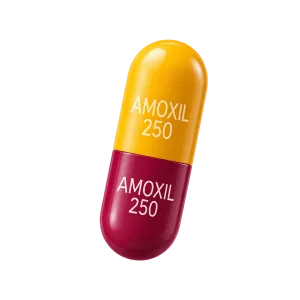
Amoxil

Active ingredient: Amoxicillin
250mg 500mg 1000mg
From $31.27
pills
4.1 (5)

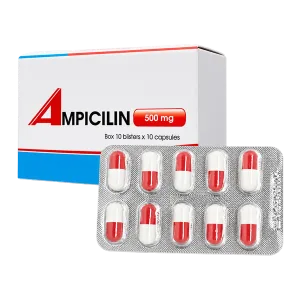
Ampicillin Current

Active ingredient: Ampicillin
250mg 500mg
From $32.95
pills
3.8 (5)

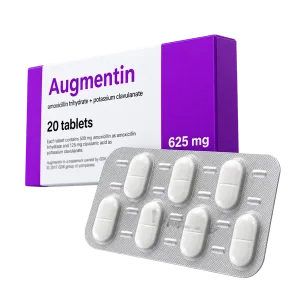
Augmentin

Active ingredient: Amoxicillin, Clavulanic Acid
625mg
From $73.12
pills
4.3 (4)

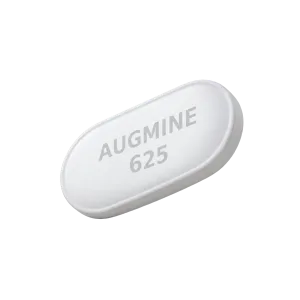
Augmine

Active ingredient: Amoxicillin, Clavulanic Acid
625mg
From $73.12
pills
4.3 (4)

Bactrim

Active ingredient: Sulfamethoxazole, Trimethoprim
480mg 960mg
From $27.80
pills
3.7 (3)

Comparison table: Antibiotics

Common questions

How does ampicillin differ from amoxicillin?

Ampicillin and amoxicillin are both aminopenicillin antibiotics that inhibit bacterial cell-wall synthesis. Amoxicillin is often absorbed more reliably by mouth, while food can reduce the absorption of oral ampicillin. The FDA labeling for each drug guides selection according to the infection, susceptibility, and patient factors . The FDA prescribing information dated 2008 provides the relevant oral-use framework. They should not be substituted without a prescriber’s direction.

Which symptoms mean stopping ampicillin and seeking urgent care?

Emergency symptoms include trouble breathing, throat tightness, facial swelling, faintness, or rapidly developing widespread hives. Urgent assessment is also needed for bloody or watery diarrhea with severe cramps, blistering skin, or peeling skin. The FDA lists serious hypersensitivity and severe skin reactions among important beta-lactam warnings . Do not take another dose after a severe allergic reaction unless emergency clinicians specifically direct it. The FDA prescribing information dated 2008 describes serious hypersensitivity as a key penicillin risk.

Can the capsule be split, crushed, or chewed?

Capsules should be swallowed whole with water unless a prescriber or pharmacist gives a specific alternative. They should not be opened, crushed, or chewed because this can make administration inaccurate and may irritate the mouth or throat. The FDA product information describes oral administration as capsule swallowing rather than chewing . If swallowing is difficult, request a clinically suitable formulation instead of altering the capsule. The FDA product information dated 2008 describes the labeled oral capsule administration.

What should be discussed with a doctor before starting ampicillin?

Discuss any previous reaction to penicillin, amoxicillin, cephalosporins, or other beta-lactams. Mention kidney disease, prior antibiotic-associated diarrhea, pregnancy, breastfeeding, and all medicines, including warfarin, probenecid, allopurinol, and methotrexate. The WHO antimicrobial stewardship framework supports choosing treatment according to diagnosis, susceptibility, and patient-specific risks . The planned regimen for the 500 mg strength should be confirmed before the first dose. The World Health Organization's 2023 antimicrobial stewardship guidance supports this patient-specific review.

How long does one dose of ampicillin keep working?

The effect of one dose depends on absorption, kidney clearance, bacterial susceptibility, and the prescribed dosing interval. Ampicillin does not remain at the same blood concentration throughout the entire day, which is why doses are spaced at regular intervals. The FDA prescribing information uses repeated dosing schedules to maintain antibacterial exposure during treatment . Do not extend the interval because symptoms have improved, and do not take extra capsules to compensate for a missed dose. The FDA prescribing information dated 2008 explains the need for scheduled repeated dosing.

Do you offer anonymous delivery?

Your order will be securely packed and shipped within 24 hours. This is exactly what your package will look like (images of an actual item sent). It has the size and look of a regular private letter (9.4x4.3x0.3 in.) and its contents cannot be seen.

Customer Feedback on Ampicillin

3.8 Based on 5 reviews
Peter N., 62 Sacramento The prescribed duration
Oct 12, 2026
Rating: 3 out of 5
Sacramento, took the 500 mg capsules for the prescribed duration for a urinary infection. The burning eased after several days, but he developed loose stools near the end of the course. He finished the treatment and felt the infection had improved, though the stomach symptoms were inconvenient.
Tom H., 52 Tampa The prescribed duration
Oct 20, 2026
Rating: 5 out of 5
Tampa, used the 500 mg capsules for the prescribed duration for a susceptible respiratory infection. He noticed that the fever settled first and his energy returned a few days later. The capsules were easy to swallow, and he was satisfied with the result.
Ian K., 61 St. Louis The prescribed duration
Oct 25, 2026
Rating: 4 out of 5
St. Louis, took ampicillin for the prescribed duration for a bacterial infection identified by testing. Improvement was gradual rather than immediate, but the pain and fever were clearly reduced during the course. He found the regular timing manageable with phone reminders.
Stephen, 64 Los Angeles The prescribed duration
Oct 30, 2026
Rating: 4 out of 5
Los Angeles, used the capsules for the prescribed duration for a confirmed susceptible infection. By the later part of treatment, he was eating normally and moving around more comfortably. He appreciated that the treatment had a clear start and finish.
Craig, 45 Houston The prescribed treatment period
Nov 7, 2026
Rating: 3 out of 5
Houston, took the 500 mg capsules during the prescribed treatment period but developed a rash that spread over his chest and arms. He stopped after receiving medical advice and was changed to another treatment. Ampicillin had not been a suitable option for him because of the reaction.

Sources

  1. U.S. Food and Drug Administration (2008). Ampicillin Capsules, USP — Prescribing Information.
  2. British Society for Antimicrobial Chemotherapy (2024). BSAC Methods for Antimicrobial Susceptibility Testing.
  3. World Health Organization (2023). Antimicrobial stewardship interventions: a practical guide.
Get our free app Shop faster and track your orders 4.0 · 378 reviews Install