Skip to content

Black Friday +8 free tablets with every order Nov 19 – Dec 2

Augmine

Augmine

Active ingredient: Amoxicillin, Clavulanic Acid

4.3 4 reviews In stock Overview
Package

$73.12

$98.87 $109.68 Save 10%

$158.61 $219.36 Save 28%

$214.23 $329.04 Save 35%

$256.46 $438.72 Save 42%

Black Friday +8 free tablets with every order until Dec 2

Delivery: 4-7 business days

Adults with bacterial infections of the respiratory tract, ear, sinuses, urinary tract, skin, or soft tissue may be prescribed Augmine when the suspected bacteria are susceptible to its antibiotic combination. Augmine contains amoxicillin with clavulanic acid, pairing direct bacterial killing with protection against enzymes that can inactivate amoxicillin.

Overview

Augmine is an oral co-amoxiclav antibiotic. It combines amoxicillin, a penicillin-class antibacterial, with clavulanic acid, a beta-lactamase inhibitor. The combination is used when amoxicillin alone may be broken down by bacterial beta-lactamase enzymes.

Dosage and administration

Augmine tablets are swallowed with water at the start of a meal. The dose is decided individually, taking age, other medicines, kidney function, infection severity, and health conditions into account.

Use Augmine in this way:

  • Take each dose at evenly spaced times.
  • Take it at the beginning of food, rather than on an empty stomach.
  • Swallow the tablet whole unless a prescriber has given a different instruction.
  • Continue for the full prescribed course, even if symptoms improve earlier.
  • Keep doses consistent from day to day.

If a dose is missed, take it when remembered unless the next scheduled dose is near. Do not take two doses together to make up for one missed dose.

A common mistake is stopping after two or three days because pain or fever has improved. Symptoms can fade before the infection has been fully controlled. Another frequent problem is saving leftover tablets for a later illness; the later illness may be viral, may need a different antibiotic, or may require urgent assessment.

Set a phone reminder for every scheduled dose during a short antibiotic course. Missed doses are common when the first days of treatment coincide with fatigue, fever, or disrupted sleep.

Formulation

Augmine is an oral co-amoxiclav antibiotic. It combines amoxicillin, a penicillin-class antibacterial, with clavulanic acid, a beta-lactamase inhibitor.

Active ingredient Pharmacological role
Amoxicillin Penicillin antibiotic that damages the bacterial cell wall
Clavulanic acid Beta-lactamase inhibitor that protects amoxicillin from bacterial enzymes

Amoxicillin works only against bacteria that are susceptible to it. It does not treat viral illnesses such as colds, influenza, or most sore throats. WHO classifies amoxicillin with clavulanic acid as an antibiotic that should be used carefully to limit avoidable antimicrobial resistance [1].

How it affects the body

Amoxicillin attaches to proteins involved in building the bacterial cell wall. Without a stable cell wall, susceptible bacteria rupture and die. This bactericidal action can be useful in infections where bacteria are actively multiplying, including some chest, urinary, skin, and dental infections.

The drug reaches many body tissues after oral administration. Its clinical value depends on the infection site, local resistance patterns, kidney function, and the likely organism.

Function of clavulanic acid

Clavulanic acid has limited antibacterial activity on its own. Its main role is to block beta-lactamase enzymes made by certain bacteria. These enzymes can otherwise destroy amoxicillin before it reaches its target.

This is why Augmine may be selected when a clinician suspects beta-lactamase-producing bacteria. The added coverage comes with a trade-off: clavulanic acid can also make diarrhea and liver-related reactions more likely than amoxicillin alone.

Therapeutic indications

Augmine is used for susceptible bacterial infections, not for every fever, cough, or painful throat. A clinician chooses an antibiotic after considering the symptoms, examination findings, local resistance data, and, when needed, culture results.

It may be prescribed for:

  • Lower respiratory tract infections, including some cases of bacterial pneumonia or acute worsening of chronic bronchitis.
  • Ear infections, including acute bacterial middle-ear infection.
  • Nasal sinus infections when bacterial sinusitis is likely rather than a self-limiting viral illness.
  • Urinary tract infections caused by susceptible bacteria.
  • Skin and soft-tissue infections, such as infected wounds, cellulitis, or bite-related infections.
  • Dental infections where bacteria have spread into surrounding soft tissue.

A bacterial infection may improve with Augmine when the organism is susceptible, yet no antibiotic can treat a viral cold. Yellow mucus alone does not prove a bacterial cause. NICE antimicrobial guidance emphasizes using antibiotics only when symptoms and clinical findings support a bacterial infection [2].

A cough or sinus pressure may linger after bacteria have been controlled. Improvement means fever, pain, and worsening symptoms should begin settling; it does not always mean every symptom disappears immediately.

Common mistakes

The most avoidable problems with Augmine come from timing, incomplete adherence, and misreading symptoms.

  • Taking doses on an empty stomach: this can worsen nausea and make the course harder to complete.
  • Stopping as soon as symptoms ease: this can allow the infection to return.
  • Doubling a missed dose: this raises side-effect risk without restoring the intended dosing pattern.
  • Using it for viral symptoms: antibiotics do not treat influenza, viral colds, or most uncomplicated sore throats.
  • Ignoring severe diarrhea: persistent watery diarrhea after antibiotics needs medical attention.
  • Calling every rash an allergy: rashes need assessment, but an inaccurate allergy label can unnecessarily limit future treatment options.
  • Sharing tablets with another person: the infection, dose, allergy history, and drug interactions may be completely different.

Reasons not to use it

  • Kidney impairment: reduced kidney function can require a modified schedule.
  • Infectious mononucleosis: amoxicillin can trigger a prominent rash in people with Epstein–Barr virus infection.
  • Liver disease: prolonged therapy may require liver-function monitoring.
  • Anticoagulant treatment: warfarin effects can change during antibiotic treatment, so INR monitoring may be needed.
  • Methotrexate treatment: amoxicillin may reduce methotrexate clearance and increase toxicity risk.
  • Allopurinol use: the chance of skin rash may rise when combined with amoxicillin.

The FDA prescribing information also lists serious hypersensitivity, liver reactions, and antibiotic-associated diarrhea among clinically relevant risks of amoxicillin-clavulanate therapy [3].

When this is not for you

Augmine is not for you if you have had a serious immediate allergic reaction to amoxicillin, penicillin, clavulanic acid, or another beta-lactam antibiotic. Symptoms such as anaphylaxis, angioedema, wheezing, or rapid widespread hives after a penicillin require a different treatment approach.

Avoid Augmine if you previously developed jaundice or significant liver dysfunction linked to amoxicillin with clavulanic acid. Liver injury is uncommon, yet it can occur during treatment or after the course has ended.

Possible side effects

Most people tolerate Augmine without serious problems. Digestive effects are common because broad-spectrum antibiotics affect normal intestinal bacteria as well as infection-causing organisms.

Reaction pattern Examples and practical meaning
Common Diarrhea, nausea, vomiting, abdominal discomfort, thrush or mucocutaneous candidiasis
Needs prompt clinical advice Persistent watery diarrhea, severe abdominal pain, widespread rash, yellow skin or eyes
Emergency symptoms Facial swelling, wheezing, trouble breathing, blistering rash, fainting

Diarrhea is one of the most frequent effects. Mild loose stools can occur during treatment and may settle after the course ends. Severe diarrhea, diarrhea with blood, fever, or strong abdominal cramping may signal antibiotic-associated colitis and needs urgent medical assessment.

Nausea and vomiting are more likely when tablets are taken without food. Taking Augmine with a meal is a practical way to reduce this problem. Mucocutaneous candidiasis can appear as oral thrush or genital yeast symptoms because antibiotics can alter the usual bacterial balance.

Rashes need careful interpretation. A mild rash can have several causes, yet hives, swelling, breathing difficulty, or blistering skin symptoms can indicate a serious allergic reaction. Stop further doses and seek urgent care for these symptoms.

Do not use anti-diarrheal medicines for severe antibiotic-associated diarrhea without clinical advice. They can mask a complication that needs evaluation.

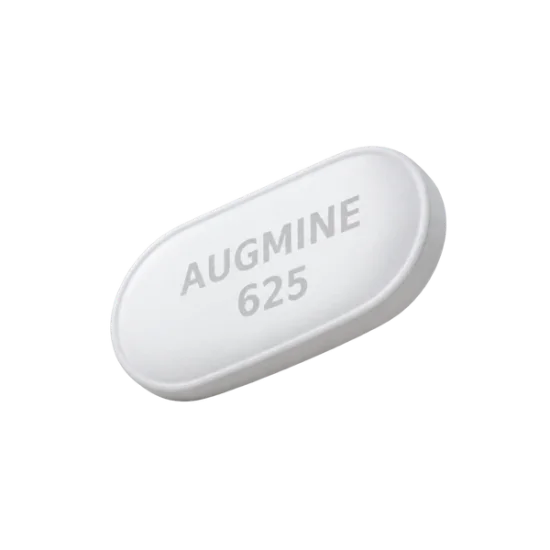
Comparison

Augmine is chosen for its beta-lactamase protection. It is not automatically the best option for every infection; the likely bacteria and infection site determine the appropriate treatment.

Treatment approach Main feature Typical clinical use
Amoxicillin alone Penicillin antibiotic without beta-lactamase inhibition Infections likely caused by susceptible bacteria
Augmine: amoxicillin plus clavulanic acid Adds beta-lactamase inhibition Suspected mixed infection or beta-lactamase-producing bacteria
Non-penicillin antibiotic class Different mechanism and allergy profile Selected when culture results, allergy, or infection site calls for another option

Amoxicillin alone has a narrower effect on gut bacteria and may cause fewer digestive problems. Augmine offers broader activity against certain resistant organisms, though broader coverage can also increase diarrhea and candidiasis. Culture testing becomes more valuable after treatment failure, repeated infection, or severe illness.

What doctors say

In clinical practice, prescribers look for a clear bacterial indication before selecting Augmine. They also ask about past penicillin reactions in detail, since nausea is not the same as an allergy and anaphylaxis changes antibiotic choices completely.

Doctors often expect meaningful improvement in fever, localized pain, or worsening discharge within the first few days when the bacteria are susceptible. A lack of improvement can point to resistance, an abscess needing drainage, a viral illness, an incorrect diagnosis, or poor absorption caused by repeated vomiting.

The 2019 Infectious Diseases Society of America guidance supports targeted antibiotic selection for urinary infections rather than treating every urinary symptom with broad-spectrum therapy [4].

Tell the prescriber about any past reaction to penicillin and describe what happened. A childhood stomachache after an antibiotic and a rapid breathing reaction are medically very different histories.

Comparison

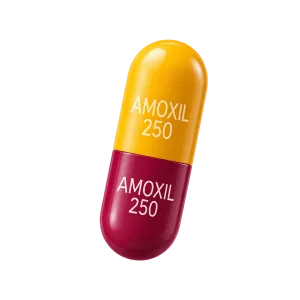
Amoxil

Active ingredient: Amoxicillin
250mg 500mg 1000mg
From $31.27
pills
4.1 (5)

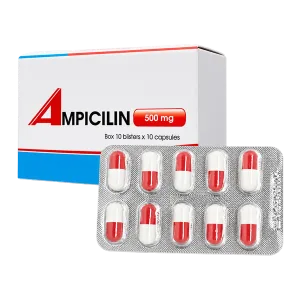
Ampicillin

Active ingredient: Ampicillin
250mg 500mg
From $32.95
pills
3.8 (5)

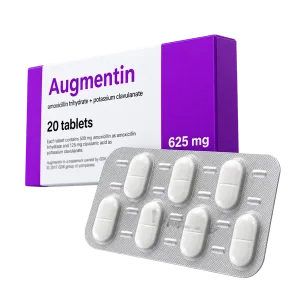
Augmentin

Active ingredient: Amoxicillin, Clavulanic Acid
625mg
From $73.12
pills
4.3 (4)

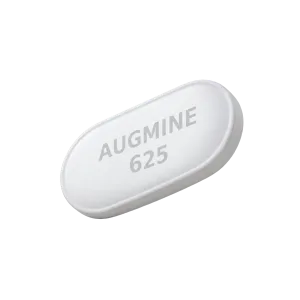
Augmine Current

Active ingredient: Amoxicillin, Clavulanic Acid
625mg
From $73.12
pills
4.3 (4)

Bactrim

Active ingredient: Sulfamethoxazole, Trimethoprim
480mg 960mg
From $27.80
pills
3.7 (3)

Comparison table: Antibiotics

Common questions

Can Augmine be combined with anticoagulants or supplements?

Augmine can interact with warfarin and other vitamin K antagonists by altering anticoagulant response. INR monitoring may be needed while treatment is underway and shortly after it ends. The FDA’s 2022 prescribing information identifies interaction-related monitoring as a clinical consideration for amoxicillin-clavulanate. Iron, magnesium, and standard vitamin supplements do not have the same absorption issue seen with some other antibiotic classes, yet every regular medicine should be reviewed before treatment begins.

How long does an Augmine course last, and is long-term use acceptable?

The course length depends on the infection site, severity, kidney function, and treatment response. Short courses are common for uncomplicated infections, while deeper skin infections or complicated respiratory infections can need longer treatment. Long-term use is not routine because it increases the chance of diarrhea, candidiasis, liver effects, and selection of resistant bacteria. WHO antimicrobial stewardship guidance published in 2023 supports using the shortest appropriate antibiotic course for the confirmed clinical indication.

Does a penicillin allergy rule out Augmine?

A history of severe allergy to penicillin rules out Augmine because it contains amoxicillin. Serious reactions include anaphylaxis, facial or throat swelling, wheezing, collapse, or widespread hives shortly after exposure. The FDA described severe hypersensitivity as a contraindication in its 2022 amoxicillin-clavulanate prescribing information. A vague report of nausea or a non-specific childhood rash may need medical clarification rather than automatic labeling as a true allergy.

How soon does Augmine start working?

Augmine begins acting against susceptible bacteria after doses are absorbed, yet symptom relief takes longer because inflamed tissue needs time to recover. Fever, pain, and local symptoms often begin improving within several days when the diagnosis and antibiotic choice are correct. The EMA’s 2022 product information for amoxicillin-clavulanic acid emphasizes that response depends on bacterial susceptibility and adequate dosing. Reassessment may be needed. Worsening symptoms, new fever, or no early improvement needs reassessment.

Can Augmine be used during pregnancy or breastfeeding?

Amoxicillin-clavulanate is sometimes used during pregnancy when the expected clinical benefit supports treatment. Pregnancy changes antibiotic decisions because the infection itself, gestational stage, allergy history, and culture results all matter. Small amounts of amoxicillin and clavulanic acid can pass into breast milk, and infants may rarely develop loose stools, thrush, or rash. The FDA’s 2022 prescribing information advises weighing maternal benefit and infant considerations when treatment is used during breastfeeding.

What should happen if Augmine does not produce the expected result?

Do not extend the course, increase the dose, or add leftover antibiotics independently. A clinician may need to reassess the diagnosis, obtain a culture, check for an abscess, or choose a treatment directed by susceptibility results. NICE guidance updated in 2018 advises reassessment when symptoms worsen rapidly or do not improve as expected during antibiotic treatment. Urgent evaluation is needed for breathing difficulty, spreading redness, severe pain, dehydration, confusion, or persistent high fever.

Do you offer anonymous delivery?

Your order will be securely packed and shipped within 24 hours. This is exactly what your package will look like (images of an actual item sent). It has the size and look of a regular private letter (9.4x4.3x0.3 in.) and its contents cannot be seen.

Customer Feedback on Augmine

4.3 Based on 4 reviews
Simon, 67 Orlando
Nov 7, 2026
Rating: 3.5 out of 5
I took Augmine for a chest infection and my fever settled after a few days. The nausea was mild but noticeable until I started taking each tablet with breakfast and dinner. I completed the course, and the cough gradually became less productive.
Gary, 68 Baltimore
Oct 12, 2026
Rating: 5 out of 5
I used Augmine for a painful sinus infection after several days of pressure and thick drainage. By the third day, the facial pain was much easier to manage, and I finished the prescribed course. I was satisfied with how quickly the pressure improved.
Matthew K., 28 San Diego
Oct 25, 2026
Rating: 4.5 out of 5
I took Augmine after a skin infection around a cut became red and sore. The redness stopped spreading within a few days, and the area healed steadily over the rest of the course. Taking it with meals fit easily into my routine.
Kevin R., 38 Phoenix
Oct 18, 2026
Rating: 4 out of 5
I used Augmine for a dental infection that had caused swelling near my jaw. The throbbing eased after a couple of days, and I was able to sleep normally again. I completed every dose as scheduled and was pleased with the result.

Sources

  1. World Health Organization (2023). The WHO AWaRe Antibiotic Book.
  2. National Institute for Health and Care Excellence (2018). Sore throat (acute): antimicrobial prescribing.
  3. Food and Drug Administration (2022). AUGMENTIN prescribing information.
  4. Infectious Diseases Society of America (2019). Clinical Practice Guideline for the Management of Asymptomatic Bacteriuria: 2019 Update.
Get our free app Shop faster and track your orders 4.0 · 378 reviews Install